Beyond the political fallout, critics say the Minneapolis policy itself could have sweeping consequences beyond its intended targets. Every family, privately held company and nonprofit in Minneapolis risks being swept up in the so-called geographic targeting order, or GTO, including nonimmigrants, according to Julie Siegel, who served as a senior Treasury official in the Biden administration and is now a nonresident senior fellow at the Atlantic Council, a Washington-based think tank.

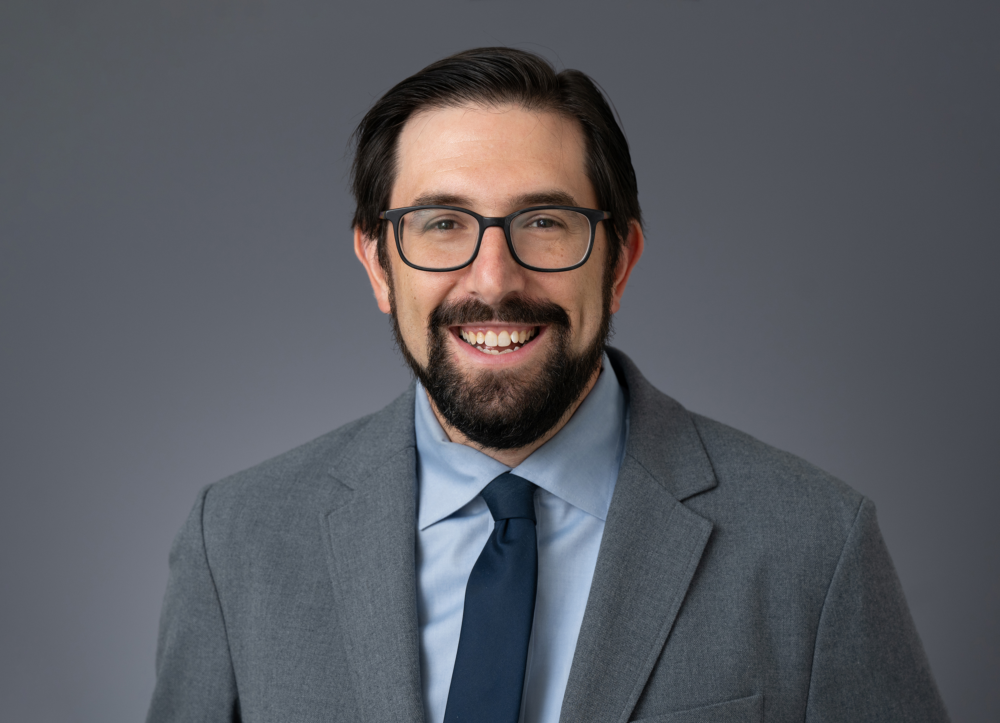
Graham Steele
Former Assistant Secretary for Financial Institutions, U.S. Department of the Treasury
Oakland, CA
Experience
- U.S. Department of the Treasury
- U.S. Senate
- Federal Reserve Bank of San Francisco
Expertise
- U.S. economic policy
- Financial and banking regulation
- Competition and anti-trust
Education
- George Washington University, J.D.
- University of Rochester, B.A.
Recent Coverage
FEB 25, 2026
Washington Post: Trump Treasury official to exit after objecting to Minneapolis crackdown
“GTOs are really important tools for law enforcement and national security investigations. Using them like this — in broad, untargeted ways — diminishes their ability to be used in targeted, useful ways, and undermines the trust of American people in FinCEN, and in their financial institutions in ways that have long-lasting effects that are hard to foresee,” Siegel said. “To undermine trust in those tools, and potentially lose those tools, is a big deal.”
FEB 24, 2026
American Banker: Permissibility is the real prize for banks in crypto bill
But some say that the market-structure bill goes further. Graham Steele, a fellow at the Roosevelt Institute and former Treasury Department assistant secretary for financial institutions under the Biden administration, said that the bill’s general definition of “digital asset” paired with the idea laid out in the bill that a depository institution and their holding companies can own digital assets appears to eliminate many activities restrictions in banking. Steele and other policy experts say that one interpretation of the market structure bill’s permissibility section means that rules around what kinds of activities banks are allowed to participate in is significantly loosened, because banks can simply put that activity on the blockchain. “All a bank or [bank holding company] would have to do would be put impermissible equities or assets on the blockchain, and it becomes permissible,” Steele said. “This seems to potentially open a giant loophole in both the National Bank Act and Bank Holding Company Act restrictions on permissible activities.”
FEB 4, 2026
Associated Press: On Capitol Hill, Treasury Secretary Bessent’s testimony descends into insults and shouting matches
Bessent’s performance was “not a role you typically see a treasury secretary play,” said Graham Steele, a former assistant secretary for financial institutions under Biden-era Treasury Secretary Janet Yellen. The department has traditionally “been removed from some of the day-to-day, hand-to-hand political combat,” Steele said in an interview. He recalled his former boss having tense exchanges over climate change and policy issues with Republican lawmakers during committee hearings, but the exchanges were not personal, he said, noting treasury secretaries have to strike a “delicate balance” of working with the White House while safeguarding the “economic stature” of the country internationally.
JAN 30, 2026
HuffPost: ‘Sock Puppet’: New Federal Reserve Pick Flip-Flopped His Way Into Trump’s Heart
“The Fed also regulates banks, and Warsh would likely pursue a traditional Republican deregulatory agenda, said Graham Steele, a fellow at Stanford University’s Rock Center for Corporate Governance and former Treasury Department official. “Should he be confirmed, we’re going to see a continuation of some of the misguided policy this administration is already doing, of weakening the rules that constrain Wall Street, deregulating the financial system in a way that had bad consequences for Main Street like the last time he was at the Federal Reserve,” Steele told HuffPost. “You’ve seen this movie before.”
MAY 30, 2024
POLITICO | Welcome to Washington, Where Background Checks Miss All Kinds of Red Flags
“The policy becomes more effective when you work for a well-functioning organization,” said Graham Steele, who left a Senate-confirmed Treasury job earlier this year (he made clear to me that he has no interest in being considered for the FDIC post).
And although no one cast the problem as being a partisan one, Steele added a message for his side of the aisle: “To me, it ought to be a particular point of emphasis for the Democratic Party, which I think it’s fair to say prides itself on being the party of functional, effective government.”
MAY 17, 2024
Bloomberg Law | CFPB Faces Fresh Fights After Supreme Court Lifts Funding Cloud
The agency will be confronted with procedural and substantive lawsuits over any coming regulations that industry opposes, said Graham Steele, who served as the assistant Treasury secretary for financial institutions in the Biden Administration.
A pending Supreme Court decision on the scope of agency leeway to regulate under ambiguous laws could throw up another obstacle to CFPB rulemaking.
“The CFPB’s won the existential portion of this and now it’s just a pitched battle going rule by rule,” Steele said.
Interested in speaking with Graham Steele?
About Graham
Graham Steele most recently served as the Assistant Secretary for Financial Institutions at the U.S. Department of the Treasury. He is an expert on financial regulation and financial institutions, with more than a decade of experience working at the highest levels of law and policy in Washington, D.C.
Graham was previously the director of the Corporations and Society Initiative at Stanford Graduate School of Business, a research initiative that examines issues at the intersection of markets, business, and government to promote more accountable capitalism and governance.
Prior to joining Stanford GSB, Graham was a member of the staff of the Federal Reserve Bank of San Francisco. From 2015 to 2017, Graham was the Minority Chief Counsel for the United States Senate Committee on Banking, Housing & Urban Affairs. From 2010 to 2015 he was a Legislative Assistant for United States Senator Sherrod Brown (D-OH), handling the Senator’s work as a member of the Senate Banking Committee. During that time, he also spent four years as the staff director of the Subcommittee on Financial Institutions & Consumer Protection. Prior to joining Senator Brown’s staff, Graham was a policy counsel at Public Citizen’s Congress Watch in Washington, D.C.
Graham received his bachelors degree in political science from the University of Rochester and his law degree from The George Washington University Law School. He is originally from Brookline, Massachusetts, and is a member of the Massachusetts State Bar.