
Experience
- U.S. Department of Labor
- National Employment Law Project
Expertise
- Unemployment Insurance
- Workers’ protections and rights
- Employment and the labor market
Education
- UMass Amherst, M.S.
- Iowa State University, B.A.
Recent Coverage
FEB 24, 2026
The New York Times: Trump Administration Tells States it Aims to ‘Reimagine’ Jobless Benefits
Michele Evermore, a senior fellow at the National Academy of Social Insurance, which researches and supports federal assistance, said there “seems to be some good-faith efforts to address fraud” in unemployment benefits dating to Mr. Trump’s first term. But, she added, “there is an angle that makes this feel more nefarious, particularly the way they talk about California.” That, Ms. Evermore continued, has left some worried that the new federal inquiry could be an “excuse” for the Trump administration “to target particular communities, rather than to target particular criminals.”
FEB 9, 2026
Yahoo Finance: The job market was bruising in 2025. The start of 2026 doesn’t look much better.
There’s some reason to believe that initial claims should be higher, said Michele Evermore, senior fellow at the National Academy of Social Insurance. In Minnesota, for example, claims dropped for much of January until slightly increasing last week, Evermore said. That’s in a state where recipients are typically better able to access benefits. In states where it’s more difficult to apply, however, some eligible applicants may be shrugging off the perk because it’s too onerous or too small. “We’re not getting a clear picture of the actual jobs market from the initial and continued claims because we’ve cut unemployment insurance to the point where it doesn’t matter anymore in some ways,” Evermore said.
FEB 3, 2026
Marketplace: Wave of layoffs suggest a labor market under increasing stress
While long-term unemployment is up, first-time claims for jobless benefits have remained low. However, that’s probably undercounting the number of people actually losing their jobs, said Michele Evermore, senior fellow at the National Academy of Social Insurance. For low-income workers, unemployment insurance is increasingly difficult to access, she said. For example, “looking at the UPS closures, North Carolina and Alabama only have 13% recipiency rates. So very few people apply for and receive benefits.”
DEC 17, 2025
Work authorization is required to get jobless aid, apart from a few states that have considered proposals to create secondary programs for undocumented people who lose work, said Michele Evermore, who formerly worked on unemployment insurance modernization in the Labor Department during the Biden administration. There aren’t widespread issues with people not authorized to work getting the benefit, she said. The Biden administration considered a similar, centralized effort for claims intake before deciding it wasn’t feasible, said Evermore. Helping states with identity verification after problems with fraud in the program during the pandemic and developing modular technology for states to tap into were top priorities. What’s different about such an effort now is the current administration’s push to consolidate data from various programs, said Evermore, although the feasibility challenges likely remain. Eligibility standards for unemployment can vary across states, making it difficult to centralize, said Evermore.
JUN 7, 2024
Newsweek | Gen Z’s Unemployment Is Becoming a Problem
However, the headline numbers did not capture the full picture of what may be happening in the labor market, according to Michele Evermore, a senior fellow at the Century Foundation and a former Department of Labor official.
She told Newsweek that certain demographic groups are seeing their job prospects getting worse. The unemployment rate for Black workers rose by half a percent to 6.1 percent in May, while that of white employees was unchanged at 3.5 percent. The Hispanic or Latino unemployment rate also rose to 5 percent for the month compared to April’s reading of 4.8 percent.
“This is where we talk about the ‘vibecession’ where we see overall good numbers, but the numbers are very bad for certain groups,” Evermore told Newsweek. “Things feel bad for young people who are coming into an unprecedented labor market with high inflation for the past few years and it’s a challenging labor market for young people.”
MAY 22, 2024
NextGov/FCW | Inside the Department of Labor’s collaboration with New Jersey to overhaul unemployment programs
States would have to likely work through differences in their policies, business processes and more to use New Jersey’s application, Michele Evermore, a senior fellow at the Century Foundation, told Nextgov/FCW.
“Copying and pasting from one computer system to another is not possible. We found that out,” she said of the pilot project, noting that other states could still take lessons learned from New Jersey’s approach.
She added that leadership buy-in is a “key element here that can’t be taken for granted.”
FEB 26, 2024
CNBC | What workers on strike need to know about collecting unemployment benefits
There is also an effort underway on the federal level to expand the unemployment program to strikers, said Michele Evermore, a senior fellow at The Century Foundation. “There is an entire generation of labor activists who are really pushing the ball, but also who haven’t lived through the hardship and uncertainty of a strike and are realizing the need for help getting through it,” Evermore said.
JAN 3, 2024
Bloomberg | Unemployed Americans Are Being Forgotten in a Strong Job Market
Nowadays, low unemployment means it’s easy for state legislators to push the issue to the back burner, said Michele Evermore, a senior fellow at the Century Foundation, a progressive think tank.
“States know they can keep up a race to the bottom for regular benefits, because the federal government will probably jump in and save claimants in an emergency period,” Evermore said.
NOV 2, 2023
Detroit Free Press | An autoworker’s guide to determine eligibility for jobless benefits during the strike
Most states also allow benefits to workers affected by a strike as long as they are not “participating in the dispute, financing it or directly interested in it,” Michele Evermore, a senior fellow at The Century Foundation, a progressive, independent think tank, said in a recent blog post on the think tank’s website. Evermore said in some states though, such as Michigan, workers who work for a firm where there is a labor dispute are not eligible for unemployment benefits if they lose work during the strike, even if they are not in the bargaining unit.
Interested in speaking with Michele Evermore?
About Michele
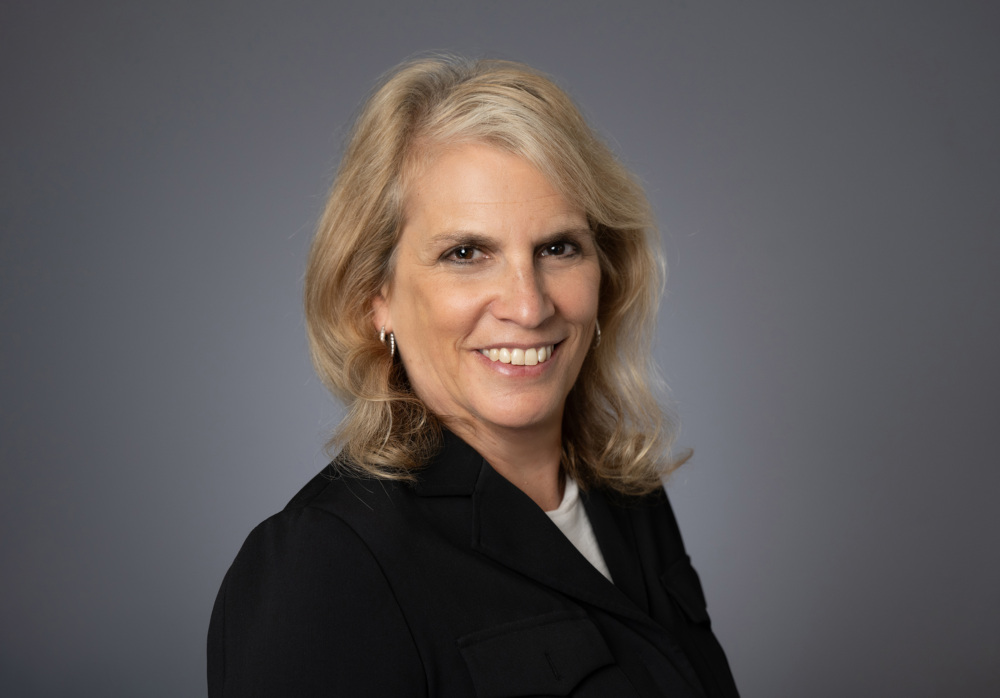
Michele Evermore is a senior fellow at the National Academy of Social Insurance, and one of the nation’s leading experts on unemployment insurance (UI) and social safety net programs.
Formerly, Michele served as a senior fellow at think-tank The Century Foundation (TCF). She joined TCF from the U.S. Department of Labor, having served as Deputy Director for Policy in the Office of Unemployment Insurance Modernization. Evermore was a central figure in the federal government’s historic expansion of unemployment aid during the COVID-19 pandemic, both from within the Biden administration and in her previous role at the National Employment Law Project, where she worked from 2018 to 2021. Her research, advocacy, and commentary were instrumental in pushing Congress to expand access to benefits and increase the duration and generosity of benefits during the pandemic—changes that kept some five million people out of poverty in 2020, studies suggest.
Prior to NELP, Evermore promoted worker rights as a legislative advocate for labor unions, including the Service Employees International Union District 1199 and the National Nurses United, and worked for the Obama administration’s Department of Labor as a senior legislative officer. Prior to that, she worked in Congress for a decade, primarily for then-Senator Tom Harkin, as well as for the House Committee on Education and the Workforce. In those roles, she worked to advance worker protections, organizing rights, and improving retirement security in a variety of private pension plan designs, as well as Social Security.