
Experience
- U.S. Department of Energy
- California Governor’s Office of Planning and Research
- Risky Business Project
- Henry M. Paulson Institute
- Center for American Progress
Expertise
- Economic impacts of climate change
- Clean energy transition
- Energy and climate policy
- Green industrial strategy
Education
- University of California-Berkeley, J.D., M.C.P.
- Wesleyan University, B.A.
Recent Coverage
FEB 24, 2026
New York Times: US Gas Prices Hit $4 a Gallon on Average, a ‘Headache’ for Drivers and Trump
“It is the biggest headache for whoever happens to be in power when something like this happens,” said Kate Gordon, a former senior adviser in the Department of Energy who is now chief executive of California Forward, a nonprofit business group. Presidents have little control over gas prices, she added, but this is an unusual circumstance. “Usually, a hurricane hits the gulf and gas prices go up, and then whoever’s in power gets blamed for it,” Ms. Gordon said, referring to the Gulf of Mexico. Mr. Trump is “going to get blamed anyway because he’s in power, but also he made the decision to go to war in Iran.”
FEB 24, 2026
Iowa PBS Market to Market Podcast: Energy Demand Surges, Sources Shrink in Energy Transition in Coal v. Renewables Debate
Kate Gordon has watched American energy policy evolve for two decades across multiple presidential administrations. Her frank conversation about rising utility bills, surging demand from data centers, the complicated truth about coal’s comeback and whether an all-of-the-above energy strategy still exists in America or whether we’re now just picking winners and losers.
JAN 16, 2026
E&E News: 4 things to watch at DOE in 2026
So not only just supporting those companies, but literally acting like a company, like finding mineral assets, finding ways to extract them, finding ways to make money off of them,” said Kate Gordon, CEO of the nonprofit California Forward and a former adviser to Secretary Jennifer Granholm in the Biden administration.
DEC 18, 2026
E& E News: How Chris Write remade DOE
“I had convinced a bunch of people to go into the department, who then all got fired and now say they would never go back to work for the federal government. So that, I think, is a huge loss,” said Kate Gordon, CEO of the non-profit California Forward and a former adviser to Secretary Jennifer Granholm under Biden. “It might be generational. We worked incredibly hard in the administration to try to make it exciting for people to go into government. It’s hard to do.”
Gordon said the cut to OCED and grant cancellations, most of which stem from the infrastructure law, flout U.S. laws. “We organized partly around deployment, which is something that the agency didn’t do. Trump just got rid of that [OCED], which I don’t think is allowed because it was created in a bill by Congress. But what does ‘it’s not allowed’ mean anymore?” she said. “What we’re seeing now is just a complete separation of the executive from the will of Congress and that is a very strange and disturbing thing to see.”
MAY 3, 2024
Semafor | Net Zero Newsletter
Kate Gordon, Visiting scholar at UC Berkeley Haas School of Business: Like the tobacco companies before them, some oil companies have clearly and consciously misled the public for decades in an effort to deflect attention from the realities of climate change (and role of fossil fuels in making the problem worse). There’s no question this will lead to increased litigation risk for these companies. The real question is: what will the public ask for as the remedy in these cases? So far, most climate litigation has focused on asking companies to help with the costs of adapting to climate change. But we may start to see AGs take a page from the tobacco playbook and start to ask for direct suport for energy transition strategies – economic and workforce development with clear community benefits – as well.
Interested in speaking with Kate Gordon?
About Kate
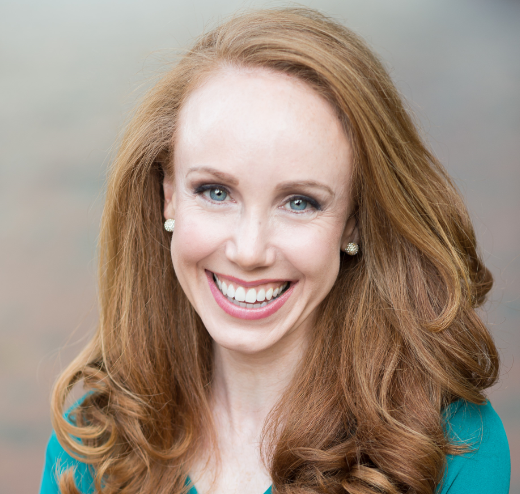
Kate Gordon has spent the past two decades working at the intersection of climate change, energy policy, and economic development. Most recently, she served as a Senior Advisor to Secretary Jennifer Granholm at the U.S. Department of Energy. Previously, Gordon served under California Governor Gavin Newsom as the Director of the Governor’s Office of Planning and Research and Senior Policy Advisor to the Governor on Climate.
Trained as a community organizer, and later in law and regional economic development, her focus has long been on bringing diverse groups together to work toward a more sustainable, inclusive economy. Prior to being appointed OPR Director, Gordon was the founding director of the Risky Business Project, which focused on quantifying the economic impacts of climate change on key U.S. regions and sectors. Gordon has served in senior leadership positions at several nonpartisan think tanks, including the Henry M. Paulson Institute, the Center for the Next Generation, the Center for American Progress, and the Center on Global Energy Policy at Columbia University.
Gordon got her start on energy and climate issues working at the national Apollo Alliance, where she ultimately served as co-Executive Director until the merger with the Blue-Green Alliance in 2011. Under her leadership, the Apollo Alliance drafted key parts of the American Recovery And Reinvestment Act of 2009 (ARRA), including the Advanced Manufacturing Tax Credit, and also partnered with the AFL-CIO to draft “just transition” proposals for several key energy and climate bills.
Gordon earned a J.D. and a Masters in City and Regional Planning from the University of California-Berkeley, and an undergraduate degree from Wesleyan University.